Saturday, January 28, 2023

In Lithuania, there were mass reports of alleged explosive devices in courts, airports and schools

 False reports of planting explosives in Vilnius and Kaunas district courts, airports, prosecutor's offices, and schools were received in Lithuania on Thursday morning, police spokesman Ramunas Matonis told BNS.

Once again, it was also reported that the explosive is in the editorial office of the information portal 15min.

According to Matonis, the Vilnius district police were informed about the planting of explosives in all schools, airports, and all prosecutor's offices.

District courts in Vilnius and Kaunas also received notifications of the presence of explosives in them and reported it to the police.

"Police officers traveled all over paradise," Matonis said.

Explosive devices were also reported in Lithuania on Monday and Tuesday. Passengers from all airports in the country were evacuated after receiving an e-mail on Monday about a possible explosive device at an unidentified Lithuanian airport. The information has not been confirmed.

False reports of explosives were received on Monday by the Vilnius school and city hall, and on Tuesday by the editorial office of the 15min.

Thursday, January 26, 2023

Nikola Tesla - what the man "from the future" said about the future

 Nikola Tesla was a Serbian-American engineer, physicist and inventor who worked in the field of electricity and electronics. He was born in 1856 in Croatia and died in 1943 in New York. He studied at the Technical University of Prague and the University of Prague. He worked for Thomas Edisons, but their collaboration ended in conflict.

Tesla was responsible for many important discoveries and inventions, including electrical power distribution systems, electric motors, radar, wireless communications, and some aspects of electromagnetism theory. His works influenced the development of many fields, including electrical engineering, electronics, radio electronics, and medicine.

He was a well-known and recognized engineer, physicist, and inventor who contributed to the development of many fields of science and technology. Some people believe that his works were ahead of their time and that he had access to secret knowledge or technology, but there is no scientific evidence for this. However, much of what surrounds us today was predicted by Tesla a hundred years ago.

In 1926, Collier's magazine published an interview with the inventor Nikola Tesla, the content of which was shocking at the time. In it, the famous scientist made amazing (for his time) predictions about the future, especially the 21st century.

Over the years, he has made many prophecies, many of which have come true. For example, he predicted that in the future there would be a completely different order in which women would play the dominant role. Humanity will begin to communicate with each other through simple handheld devices. The planes will be controlled unmanned and more.

10 amazing predictions by Nikola Tesla that turned out to be true

1. Wireless connection

If the industrialist John Morgan had not been stingy in supporting Tesla's development, the Serbian scientist might have come up with the invention of the Internet - at least he claimed that the Wardenclyffe tower would be able to wirelessly transmit voice, text and images to anywhere in the world. world.

He claimed that images were already transmitted by wire (telegraph) over short distances, but in the future wireless transmission would make the distance unlimited.

2. Drones/RCVs

A boat without oars that glides on the water by itself - such a sight appeared before the eyes of those who watched Tesla's demonstrative experiment in 1898. Using a self-imagined remote control, batteries, and switches, the shore engineer turned the boat's helm, engaged the propeller, and lit the sidelights on deck, which looked amazing for the time.

In fact, Tesla presented the world's first prototype of a real robot 22 years before the Czech writer Karel Capek came up with the very definition of such a technique, and in the modern world, it has taken a strong place and continues to develop.

3. Automated workforce

As early as the 1930s, technology had advanced so much that ordinary human activities were performed by an automated workforce. In 1935, Nikola Tesla predicted that robots and machines would almost completely replace human labor. While this has yet to happen, it is more than clear that machines are already replacing human hands in many industries, and experts often point to this as one of the biggest challenges of the future as many people lose their jobs due to technology.

4. Cheap renewable energy

Nikola Tesla believed that the whole world is filled with an infinite amount of energy, which, with the appropriate level of technical equipment, can be used for free anywhere and anytime.

He also believed that we could use water to generate cheap renewable energy to replace conventional, expensive sources. He even wanted to give people free energy, which his investors did not like very much.

5. Mobile phones/smartphones

Nikola Tesla predicted that small wireless devices will appear in the world that will combine various technologies and wireless connections. Although he did not explicitly say the words "mobile phone" or "smartphone", his 1926 description sounds similar.

He described a device that would allow us to see and hear each other as if we were talking face to face and would be small enough to carry in a pocket.

6. Autonomous cars

In 1898, Nikola Tesla proposed building a motor carriage that could independently perform various operations. It took another 100 years for this to become a reality, but now the company of the same name (Tesla) has proven that it is the technology of the future.

7. Increasing importance of environmental protection

One of Tesla's most important predictions is an increase in environmental protection. He assumed that this would happen by 2035, but it happened much earlier - the US Environmental Protection Agency was founded 35 years later, in 1970.

8. Women's empowerment

Tesla predicted that women would play a dominant role in the future. He suggested that women receive an education equal to men and begin to occupy leading positions in society.

9. Science will become more important to society

In his day, politics and war were the dominant themes in society. One of Nikola Tesla's predictions was that in the future newspapers would focus more on science than politics, and the public would be much more interested in the latest discoveries than in wars. While politics still makes headlines in newspapers, news channels, and social media, people are generally more interested in science than they were during Tesla's lifetime.

10. Wireless Messaging

Tesla predicted that printed newspapers would be replaced and news would be delivered wirelessly. He predicted that everything would be available to people at home every day.

To this day, Nikola Tesla is valued by mankind for his contribution to the development of science and technology, especially in the field of electricity. His works had a decisive influence on the development of many fields. His works were important for the development of many fields, and his inventions and discoveries greatly contributed to technological and scientific progress.

Can a time traveler change the past?

 Can a time traveler change the past? If so, it seems the universe has an unknown power that can change events.

The time travel theory suggests that the traveler can change the past, but that depends on the particular time travel theory being considered. Some theories suggest that the past is immutable and cannot be changed, while others suggest that the past can be changed, but this leads to alternate realities or timelines.

A new study from the University of Queensland may change that view a bit, as it suggests that you can't go back in time and change the events of the past. Even if time travel is possible, a bizarre chain of events could alter the timeline. National Science Foundation program director and astrophysicist Joe Pesce discussed new research into Einstein's theory of general relativity. Using the example of COVID-19, he suggested that if a time traveler tries to stop Patient Zero from spreading the virus, time will repair itself. So he or someone else could become patient zero and the pandemic would happen anyway.

Using himself as a hypothetical time traveler, Pesce explained:

"I'm going back in time. If I prevent patient zero from becoming infected and contain the pandemic, it will remove my motivation to travel back in time." And that's the essence of the grandfather paradox." “So what these researchers have discovered in mathematics is that events will recalibrate themselves. So maybe I'll go and keep Patient Zero, but then I'll become Patient Zero and start an infection."

"Ultimately, the endpoint is still the same; the pandemic will still happen. But the specific events, perhaps the details of the timeline, will change. So the math shows that you really can't go back and influence the endpoint. The endpoint will always be the same. and the same. We can come to this in a different way," he said.

Notably, it remains unclear what mechanism the Universe could use to recalibrate the timeline. Wouldn't the change of events itself be a kind of time travel? Then who or what changes the chronology?

She saw her late husband in the restaurant. "He ate what he always did"

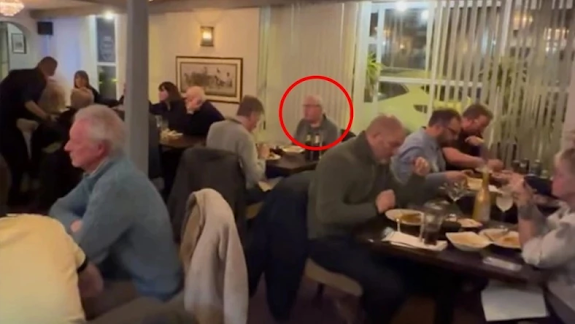
 Brit Lucy Watson claims she spotted her husband in a local restaurant video. It wouldn't be surprising if it wasn't for the fact that the man died nine years ago. The restaurant staff says the video was recorded last week.


Photo Facebook/Jeriko NauticalFacebook/Jeriko Nautical

A widow froze when, quite by chance, she saw a Facebook video of her husband sitting at a table in a restaurant in Westbourne village eating his favorite dish.

"I thought, oh my God, it's Harry," Lucy Watson told the Daily Mail when she saw the well-known figure. "I have no doubts." I even noticed that she was eating the same dish as always. My son is sitting next to me.

The British woman was convinced that the recording dates back 10 years because her husband died in 2014. So she asked the restaurant staff when the frames were recorded. The employees of the premises very quickly gave a surprising answer: this is a recording from last week.

Lucy did not want to believe it, until it turned out that the tables and their arrangement had recently been changed in the restaurant.

— Before January 2023 there were white and red tablecloths, now they are not. This is the best proof that the film is up to date

Lucy Watson is convinced that the film shows the ghost of her husband returning to the restaurant to sit at his favorite table.

Tuesday, January 24, 2023

Pale skin and cold hands are signs of iron deficiency in the blood

 Iron deficiency anemia can occur due to a lack of iron in the diet, poor absorption of iron from the gut, or iron deficiency due to blood loss.

Due to the increased demand for iron, there is a risk of iron deficiency anemia during pregnancy and lactation, as well as in growing children and adolescents.

1. Constant fatigue

If you sleep enough but feel very tired all the time, you may have tissue oxygen deficiency, which is one of the consequences of iron deficiency.

2. You have pale skin

This iron gives hemoglobin its red color, which in turn gives color to the skin. Therefore, with iron deficiency anemia, the intensity of the red color is reduced.

3. Constantly cold hands and feet

If your body doesn't have enough iron, the number and size of red blood cells in your blood decreases. In this case, blood flow is directed primarily to vital organs such as the heart, kidneys, and liver.

4. Very high heart rate

The pulse speeds up when the body senses that there is little oxygen in the blood. This is because the heart is doing extra work to pump more oxygen-rich blood faster.

The daily recommendation for iron is 10-15 mg. 10 mg of iron is found in one of the following foods, for example:

  •       50 grams of the stewed liver;
  •       55 grams of wheat bran;
  •       90 grams of lentils;
  •       125 grams of black pudding;
  •       400 grams of stewed beef.

What foods affect blood cholesterol levels?

 High cholesterol levels increase the risk of cardiovascular disease. The body needs a certain, moderate amount of cholesterol to function properly because our body uses cholesterol to build cells and produce vitamins and hormones.

Cholesterol is a waxy substance produced by the liver. The body needs a certain amount of cholesterol to function properly, using it to build cells and produce vitamins and hormones.

Cholesterol also comes from animal products, including meat, poultry, and dairy products. This type of cholesterol is dietary. Saturated and trans fats can raise blood cholesterol levels because they increase the amount of cholesterol produced by the liver.

"Bad" cholesterol, "good" cholesterol.

There are two main types of lipoproteins, low-density lipoprotein (LDL), also known as "bad" cholesterol, and high-density lipoprotein (HDL), also known as "good" cholesterol.

Excess LDL cholesterol can build up on artery walls, narrowing them and increasing your risk of heart attack and stroke. And does the body need cholesterol from food?

Yes, you need to monitor the amount of cholesterol you get from food. For health, its moderate level is still better than excess. However, in general, dietary cholesterol does not pose a health risk. The optimal safe amount depends on a person's activity level, genetics, underlying health issues, and age.

Animal products contain dietary cholesterol, including egg yolk, shrimp, beef, pork, poultry, cheese, and butter.

A 2018 study looked at the effect of eggs, one of the largest sources of dietary cholesterol, on total blood cholesterol levels. According to the results, people may react differently to dietary cholesterol depending on their genetics and metabolic factors.

For most people, dietary cholesterol intake raises total blood cholesterol levels to little or no extent.

Overall, research shows that the dietary cholesterol found in eggs does not adversely affect total blood cholesterol levels. In people who eat eggs to lose weight or maintain weight, eating these foods may cause minimal changes in LDL and HDL cholesterol levels.

Researchers concluded that those who do not eat meat products may consume more eggs and dairy products. For example, if older adults do not have high cholesterol, eating two eggs a day may be part of their daily diet.

Many dietary sources of cholesterol other than eggs and shrimp are also high in saturated fat. Saturated fats, in turn, increase LDL cholesterol levels and the risk of cardiovascular disease.

A 2020 American Heart Association (AHA) study looked at the link between dietary cholesterol and the risk of cardiovascular disease. The obtained data did not give unequivocal results. In addition, most other studies show no significant association between dietary cholesterol, including egg consumption, and coronary heart disease, heart attack, or stroke.

On the other hand, some studies have shown that eating half an egg a day can increase the risk of heart disease by six percent.

According to the Tervise Arengu Instituut, we get the most saturated fatty acids from meat products with visible or hidden fat (e.g. as well as from bakery products).

Some of the healthiest foods include, but are not limited to: vegetables, fruits, whole grains, low-fat or fat-free dairy products, "lean" or plant-based protein, nuts and seeds, and liquid vegetable oils.

Did the aliens from Andromeda tell about the origin of humanity?

 There are many theories about extraterrestrial life forms operating in the universe. Many people claim to have been abducted and even government officials have reported sightings of so-called "space brothers". One such person is Alex Collier.

Collier claims that he regularly came into contact with aliens from the Andromeda galaxy. In his interviews, he often rambles about the influence of various alien races on humanity. This information is supposed to come from his alleged contacts with the Andromedans.

The man claims that he began experiencing contact with extraterrestrials in his childhood and that they continued into his teenage years. They temporarily ceased while he was serving in the U.S. Army, but contact resumed in 1985. According to Collier, the two Andromedans became his mentors and for three months they gave him information about cosmic spirituality, life in the universe, and the true history of Earth.

Collier describes the Andromedans as "one of the thousands of existing extraterrestrial races". He claims that they resemble humans, although some have bluish skin and are over 2 meters tall. According to his thesis, Andromeda is one of the oldest civilizations in the Andromeda constellation, technologically ahead of us by about 5,000 years.

The ufologist maintains that according to the words of the Andromedans, their goal is to help humanity ascend from the third to the fourth dimension. The fourth dimension is characterized by collective consciousness, telepathy, and clairvoyance. Humanity requires this help because Earth is under the control of "regressive" extraterrestrials who are manipulating our DNA.

It should not be overlooked here that the theses proclaimed by Collier are surprisingly in line with the messages coming from the Pleiadian and Cassiopean channelings. Is there a world behind the veil of our reality that we have no idea about? Or maybe we are dealing here with a very coherent message, developed for the purpose of selling books about alleged "cosmic brothers".

What is known about secret anti-gravity technology

 Antigravity technology does not officially exist, but unofficially suitable prototypes have long been developed. However, all data on this subject is strictly confidential and only a few could see it. There is currently no scientific evidence of effective anti-gravity technology. Many concepts and theories regarding antigravity have been presented in the scientific literature, but none of them has been experimentally confirmed. Physical theories such as Einstein's theory of relativity and quantum theory do not predict the existence of antigravity. However, many companies and individual researchers claim to be working on developing anti-gravity technologies.

One of the pioneering antigravity researchers is Otis Carr (1904–1982). He was an American inventor and designer who claimed to have developed effective anti-gravity technology. Carr claimed that his designs, called "Otocraft", were capable of flying through the air using antigravity. However, there is no evidence that his designs were effective or even capable of flight. Carr was the subject of much controversy and criticism from scientists and flight specialists who claimed that his claims and constructions were false.

It turns out that anti-gravity technology is far from a conspiracy. On the contrary, there is strong evidence for it. But when we talk about this topic, it's essential to understand the secret service world. In a recent study by Michigan State University, a team found that the Department of Defense and the Department of Housing and Urban Development were nearly $21 billion short. This money is believed to be used for unregistered programs over which Congress has no control.

Anti-gravity technology definitely falls into the category of inventions that could threaten the control of the elite. Many experts and high-ranking people, military organizations and participants in secret programs spoke about the topics they witnessed. Some of them are various directors of Lockheed Martin's aerospace and defense technology company. One of them is Steve Justice.

He spoke openly about the technologies he had seen and worked with. According to him, they are several generations ahead of those we know today. There is also intensive work on UFO-like aircraft. They mimic the possibilities seen in unidentified flying phenomena with a propulsion system that alters space-time.

It should also be mentioned that the owners of antigravity technology were also supposed to be the Nazis. They allegedly created a series of vehicles called Haunebu, which conspiracy theories claimed were built by the Germans during World War II. According to these theories, these vehicles were capable of spaceflight and used mysterious anti-gravity technology. However, there is no convincing historical evidence that these vehicles were actually built or used by the Nazis.

There is a theory that these Nazi anti-gravity saucers were de facto modern versions of Hindu Vimans. In this context, the Ahnenerbe organization, which was founded in Germany in 1935, should be mentioned. Its name comes from the words "Ahnenerbe" meaning "heritage of the ancestors". This organization was affiliated with the SS and aimed to study and promote German culture, racial science and archaeology. The Ahnenerbe conducted many studies and expeditions in various parts of Europe, Asia and Africa, which aimed to prove the thesis of the superiority of the Aryan race. These experts were supposed to find an ancient vimana somewhere in Tibet and it was transported to Germany to copy the technology as wunderwaffe.

Vimanas are hypothetical flying machines that, according to Hindu mythology and tradition, were used by gods and kings to fly through the air. The word "vimana" comes from the Sanskrit language and means "floating in the air". According to ancient texts, vimanas were spaceships that could travel through the air, in space, and between planets. Some say that the vimanas were actual machines that actually existed in the past, others consider them to be mythological elements with no reference to reality.

Slipped out of the house at dawn and disappeared

 Tomasz Desecki - slipped out of the house at dawn and disappeared

The Desecki family spent the winter evening of January 14, 2002, playing cards together. The parents and their five sons gathered around the table: Przemek, Patryk, Tomek, Adam and Jarek. The youngest was four at the time and the oldest was twenty. Most of the family finished the game around 10pm. The younger boys, however, went to bed earlier.

The mother woke up in the night and decided to look into her son's room. At first, she thought they were all asleep. But then she noticed that Tom was lying on the bed with his eyes open. He then looked at his mother strangely. The woman soon left the room and went back to sleep. She did not ask her son why he was awake. She would probably behave differently today because it was the last time she saw Tomek.

The next day, around 6:00 in the morning, the family members woke up to a terrible cold. It turned out that the cause was the open front door. The parents thought it was a strange sign, but they hastily closed the door and went about their morning chores. The house was a little chaotic as usual because everyone in the household wanted to get ready for work or school as soon as possible. Only after some time did family members notice that Tom was missing.

The teenager attended a private school in Włocławek, where he studied painting. Covering expenses for education was possible thanks to a scholarship from the Minister of Culture and National Heritage. The boy covered a distance of about 30 kilometers by bus every day. He left the house around 7:00.

Initially, the closest people thought that Tomek had just left earlier that day. The open door could be explained, for example, by the fact that the boy did not close it properly. Strong gusts of wind may have caused it to open to its full width.

However, family members began to worry when they discovered that Tomek had not brought his backpack with him. What was even weirder was that the teenager's warm clothes were also left in the house, in particular the jacket he wore at the time. After checking the contents of the wardrobe, it turned out that the 18-year-old had probably taken thin, summer trousers belonging to his father. There was also a lack of old sneakers, which were certainly not the best footwear for January weather.

Another curious discovery was made in Thomas's room. Salt had been spilled in the corners, and a white candle was still burning on the table. It looked like the remnants of some strange ritual. Remnants of hair dye were found in the bathroom. Everything indicated that the teenager had dyed his hair blonde.

Close to the house, relatives discovered a paint-stained plate, a cloth, a comb, and the teenager's clothes he had been wearing the previous day. The concerned family reported Tomek missing to the police.

After the disappearance of the high school student, relatives remembered several situations that they now saw in a new light. A few days before his disappearance, Tomek talked to his mother about his future. He confessed that he would like to become a monk or a missionary. The surprised woman asked if he would like to be a priest. The teenager denied it, saying he would rather live in poverty and help those in need.

In the months leading up to his disappearance, Tomek also began to behave differently. Although he has always been quite introverted and taciturn, he began to avoid people even more, even those close to him.

He unexpectedly broke up with the girl, without giving a specific reason for the breakup. He also did not respond to attempts to contact his cousin, with whom he had been friends from an early age. He spent much of his time in prayer and meditation. Tomek was often described as a very spiritual person.

Another interesting thread was Tomek's unexpected trip to Unieście. This seaside town (now part of Mielno) was about 300 km away from the home town of Rabinów. The teenager went there one September day instead of going to school. Then he visited his uncle, who lived in nearby Koszalin.

The parents became concerned when their son did not come home from school that afternoon. In the evening, the long-awaited telephone rang at the Deseckis' house. The aforementioned relative from Koszalin then informed his family about Tomek's visit. Surprised parents decided to go for their son. They wanted to make sure that the teenager would return home without any adventures. They also wanted to know why the boy decided to go on this spontaneous trip.

However, Tomek did not want to reveal his secret. The parents pushed harder. So the teenager told a story about a kidnapping. He was allegedly forced into a car near the Włocławek railway station. He then lost consciousness and then woke up by the sea. However, the parents did not believe this story.

According to another scenario, the boy went on a journey to meet a person he might have met during a school trip to Unieście, which took place a few months earlier. It is also worth adding that there was a Franciscan monastery in nearby Koszalin. Maybe that's where Tom went? After all, from a conversation with his mother, it appeared that he planned to become a monk.

The 18-year-old was seen on the day of his disappearance by a neighbor after 5:00 in the morning at the bus station in nearby Żydów. The alleged witness initially did not realize that Tomek was waiting with him for the bus. However, the neighbor recognized the teenager when he got into the vehicle and bought a ticket to Włocławek. However, it is not known whether Desecki reached there, because the man took a nap on the bus. When he woke up, the teenager was gone.

Someone similar to Tomek was also seen by his school friend. It took place on January 15, around 7:00 am at the railway station in Włocławek. However, the teenager wasn't sure if she had noticed Desecki. Apart from these two leads, there was no information on the case.

So the family got involved in the search, but unfortunately, their efforts did not bring any results. Relatives tried to contact many religious orders, but most refused to give them any information. Years later, however, it turned out that the parents' hunches could be right.

In March 2020, the missing man's family was cleaning up. Tomek's father accidentally came across a copy of the baptismal certificate while looking through the documents. It turned out that the church document was issued at the request of the missing person. The baptismal certificate was dated September 15, 2001.

The relatives connected the facts and realized that Tomek had to ask for a birth certificate right after the trip to Unieście. It's unlikely to be a coincidence. The Desecki family turned again to virtually all religious orders in Poland. And this time their efforts were fruitless. The monks were hiding behind the protection of personal data. Others did not answer the phone at all and did not reply to the e-mails of desperate loved ones.

The police prepared a probable image of Tomek years later. Unfortunately, all these efforts failed to find the missing person. Despite more than 20 years since that memorable January morning, the family does not lose hope that one day they will be able to learn the fate of their beloved son and brother.

Wednesday, January 18, 2023

A new technique for deciphering people's thoughts can now be used remotely

 Scientists can now "decipher" people's thoughts without touching their heads. Earlier methods of mind reading involved implanting electrodes deep into the human brain. The new method, described in a report published on September 29 in the bioRxiv preprint database, is based on a non-invasive brain scanning technique called functional magnetic resonance imaging (fMRI).

fMRI tracks the flow of oxygenated blood through the brain, and because active brain cells require more energy and oxygen, this information provides an indicator of brain activity. By its nature, this scanning method cannot capture real-time brain activity because the electrical signals emitted by brain cells travel much faster than blood flows through the brain.

It is worth noting, however, that the authors of the study found that they could still use this imperfect substitution to decipher the semantic meaning of human thoughts, although they could not make a literal translation.

In a new study that has not yet been peer-reviewed, the team scanned the brains of one woman and two men in their 20s and 30s. Each participant listened to a total of 16 hours of various podcasts and radio shows over several sessions at the scanner. The team then fed these scans into a computer algorithm they called a "decoder," which compared patterns in the audio recordings with patterns in recorded brain activity.

An algorithm could take an fMRI recording and generate a story based on its content, and that story matched the original podcast or radio show "quite well." In other words, the decoder could determine which story each participant heard based on their brain activity.

At the same time, the algorithm made some mistakes, such as switching character pronouns and using the first and third persons. He understands quite well what's going on, but he doesn't know exactly who's doing it. In additional tests, the algorithm was able to explain quite accurately the plot of a silent movie that participants watched in a scanner. He was even able to tell the story the participants imagined in their heads.

In the future, the research team intends to develop this technology so that it can be used in brain-computer interfaces designed for people who cannot speak or write.

The study was reported in The Scientist.

Mystery of her vanishing time

 Arthur had a peculiar habit of collecting old, broken handheld vacuum cleaners. He didn’t fix them; he just liked the way the plastic casin...